Spider-Verse party games: change the solution, keep the problem
A neighbor drops a stack of birthday invitations on the sidewalk. In one universe, a dotted trail of light helps collect them. In another, a folded paper bridge carries them safely across a puddle. In the third, a bold ink arrow points toward someone who can help. That is the whole challenge: one small problem, three different solutions, and a comic page that belongs to its creators.
This Spider-Verse birthday is a paper comic afternoon for eight children ages seven to eleven. They work in four pairs for about twenty minutes, then read the different versions together. Plan around 90 minutes for the full gathering and an estimated 45-60 minutes of preparation. Two adults make it easier: one leads the drawing and helps with writing, while the other handles arrivals, food, and practical needs.
Give each pair a landscape sheet with three large panels. They choose one everyday problem, then show three alternative endings, one in each visual universe. The panels are alternatives, not a three-step rescue. Keep the same main character and starting problem so visitors can recognize what changed. No film knowledge is required, and there is no winning version, fastest artist, or superhero obstacle course.


Show a deliberately simple worked example
Draw a person, three envelopes, and a puddle on a scrap of paper. Explain that your person wants the invitations back, not a fight. In the neon-city panel, draw a dotted trail leading to each envelope. In paper world, draw a folded bridge over the puddle. In ink world, draw a big arrow and a neighbor who asks, “Would you like a hand?” Three rough sketches already demonstrate the activity.
A child may reasonably ask whether the bridge is realistic. That is a good opening: a comic can invent a world rule, but it should show how the rule helps with the chosen problem. The paper bridge works in a world where paper can hold a person. The ink arrow works because someone notices it. The point is an understandable cause and effect, not a beautiful drawing or a technically correct engineering design.

Ask each pair to say their problem in one sentence before drawing. Offer four choices from the printable: dropped invitations, a missing last page, a rainy picnic, or a shy new neighbor who wants to join a game. Children can invent a different ordinary problem if both partners agree. Avoid using a real guest's embarrassment as the plot. The adult can help turn a frightening idea into something small and manageable.
If a pair begins copying a movie scene, invite them to keep the character they like and give that character the dropped invitations instead. They do not need a villain or a dangerous stunt to make a satisfying comic. A guest who does not know the characters can invent a helpful neighbor. Give that version the same room on the reading wall as the most detailed superhero drawing.
Spider-Verse party ideas with three visual voices
Use neon city, paper world, and ink world as three drawing languages. They are original workshop choices, not official categories from the films. Neon city uses cyan, magenta, and dotted motion trails. Paper world uses red and cream with torn-looking edges drawn in pencil or made from large paper scraps. Ink world uses black lines, hatching, and one accent color chosen by the pair.


Those differences should make the alternatives visible even to someone who does not read the captions. Let children use patterns and line weight as well as color, so nobody has to distinguish similar shades to follow the page. A thick line and a dotted path can do the work. If a guest loves one color, let it appear in all three panels while the marks change.
Keep the character recognizable with one repeated detail: the same shoes, a little scarf, or an oval face. Original characters are welcome. For fans who want a familiar starting point, Miles and Gwen can inspire the color contrast and different ways of moving through a city, but the paper problem remains the group's own. Do not require costumes or masks; children need clear vision and comfortable hands for drawing.
Take a moment to compare two panels before adding the third. Ask, “What does your character do differently here?” If the answer is only “The background is pink,” suggest changing the action too. Perhaps the character asks for help in one universe and invents a tool in another. The finished page becomes more interesting when the choices change, not just the color of the sky.
Build a newsroom where both partners get a turn
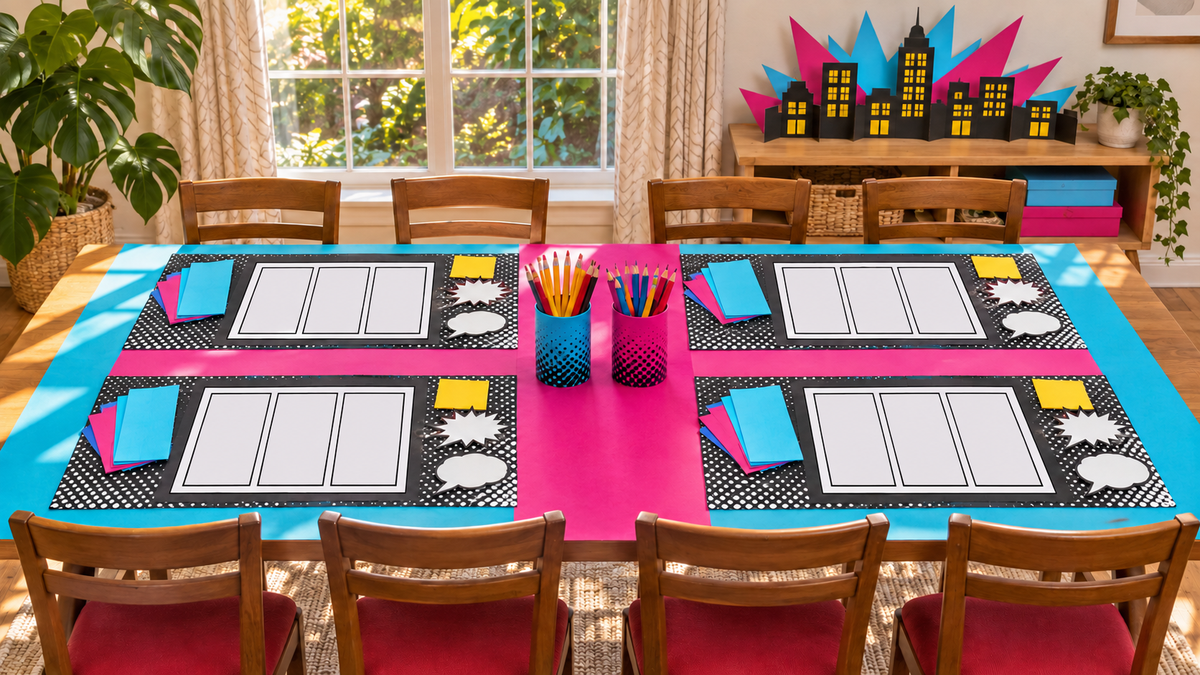
Arrange four pair workspaces at one large table or two smaller tables. Each pair gets one comic sheet and two pencils. Put two shared cups of colored pencils, black pens, and a few large red paper scraps within easy reach. Glue sticks are optional. An adult pre-cuts any backing board and keeps cutting tools off the guest table. Leave a clear route to seats and exits.

One partner suggests while the other draws the first universe; they switch for the second. Before the third, ask them to choose roles together, then invite each to add one small finishing detail. These roles are flexible: a child may dictate, write, draw, or ask an adult to scribe. The leader checks that a confident artist is leaving room for their partner's ideas instead of taking over the whole sheet.

Allow about twenty minutes, with an extra five if needed. Do not announce a loud countdown or stop someone mid-sentence to keep an exact schedule. A pair that finishes early can choose a shared title and add the creators' first names. A pair that gets stuck can use the host example for the first panel, then invent just two alternatives. Nobody has to show their work publicly to take part.
Comic intermission: pizza squares and a low cake
Clear the paper and pens before food arrives. For eight guests, estimate sixteen small pizza squares, eight small portions of peeled mandarin segments, and water as a starting snack allowance. Increase or change that for your meal time and guests. Ask about allergies and food needs beforehand, keep ingredient information, and use separate utensils for any separate food. Let an adult serve, and have everyone eat seated.

Cyan plates, magenta napkins, and black-and-white dotted paper placemats carry the comic feeling. Keep the cardboard skyline on a side shelf rather than between plates. There is no need to dye drinks or add complicated edible webs. A familiar snack also gives children a pause from making choices, especially if they spent the drawing time negotiating a shared story.
Choose one low round cake with dark blue frosting and cyan and magenta icing trails, or eight cupcakes in the same colors. Flat icing character portraits can add a familiar detail when available; a dotted path and bold color contrast also work. Keep loose paper scraps and toys off the food. The serving adult removes candles and cuts the cake. Plan a separate portion with the family when a guest needs one.
A reading wall, and a zine that does not split the partnership
Display the four pair sheets on a freestanding backing board or lay them flat on a clear table. Each sheet stays intact. Put the title and both creators' first names below it, with no ranking or “best comic” vote. Give guests about ten minutes to look together. A visitor can ask, “What changed in this universe?” and let either creator answer or choose not to explain.

For a small room, bring one sheet at a time to the seated group instead of making a standing queue. Let the pair point to the panel they most want visitors to notice. Children can read the captions aloud, ask the host to read, or leave them for visitors. If someone wants their comic kept private, turn that sheet over and offer it only to the people the creators choose.
Each guest gets a separate folded zine cover from page four of the free kit. They redraw one favorite ending or detail inside it, so every creator leaves with something while the pair page remains together. Offer two blank half-sheets for anyone who wants extra pages, or use the inside cover alone. Decide with both creators who takes the original pair sheet; the other can keep a household photocopy later if both families agree.

The printable has four pages: host guide with worked example, three-universe comic sheet, four optional problem cards, and a folded cover. For eight guests in four pairs, print page one once, page two four times, page three once, and page four eight times: fourteen sheets. Page two is landscape; the others are portrait. Print on US Letter at 100%. An adult cuts the four problem cards; the covers only fold at the center.

When a universe needs a small repair
If a pair argues, stop adding new story elements and ask each child to name one thing they want to keep. Keep both, then change something else: the setting, tool, or person who offers help. If that does not settle it, give each child a separate blank sheet with the same problem. The goal is a comic they can own comfortably, not a lesson delivered through forced teamwork. Have four spare plain sheets ready for this possibility.
For younger guests or a group that prefers less writing, let an adult read the problem cards and use drawings only. For older guests, add one speech bubble per panel that shows a different attitude toward the same situation. These are optional extensions, not extra rounds everyone has to complete. Keep any energetic play separate from the art area and avoid climbing furniture, throwing paper props, or stretching strings across the room.
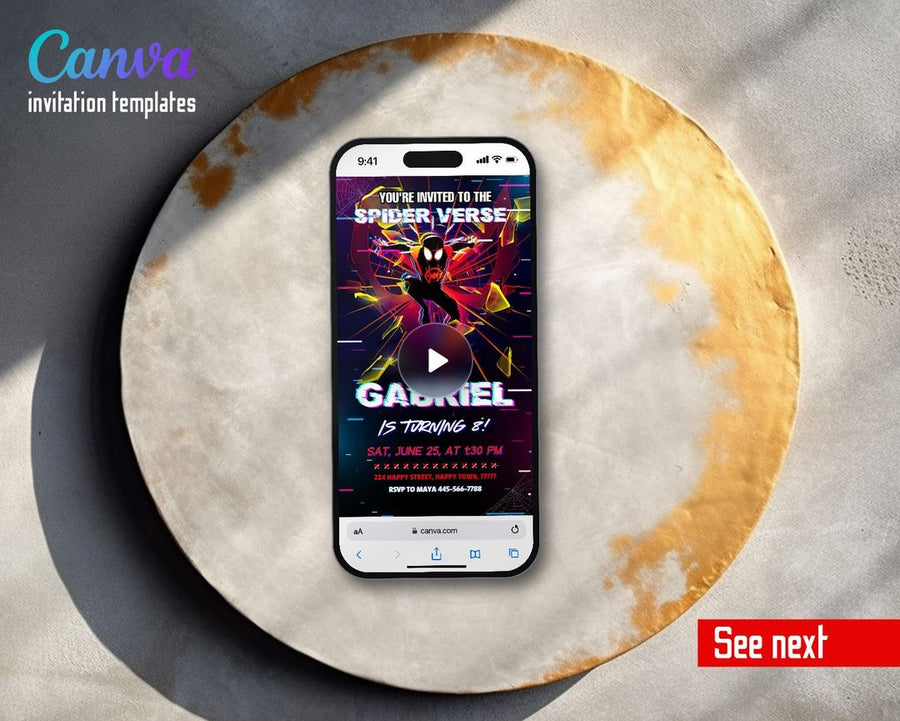
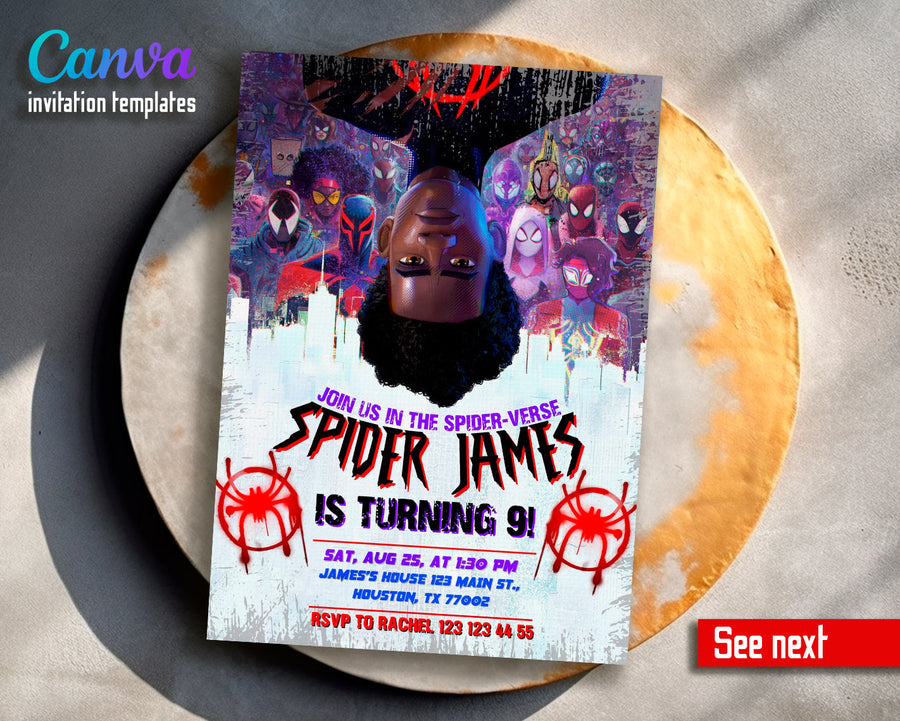
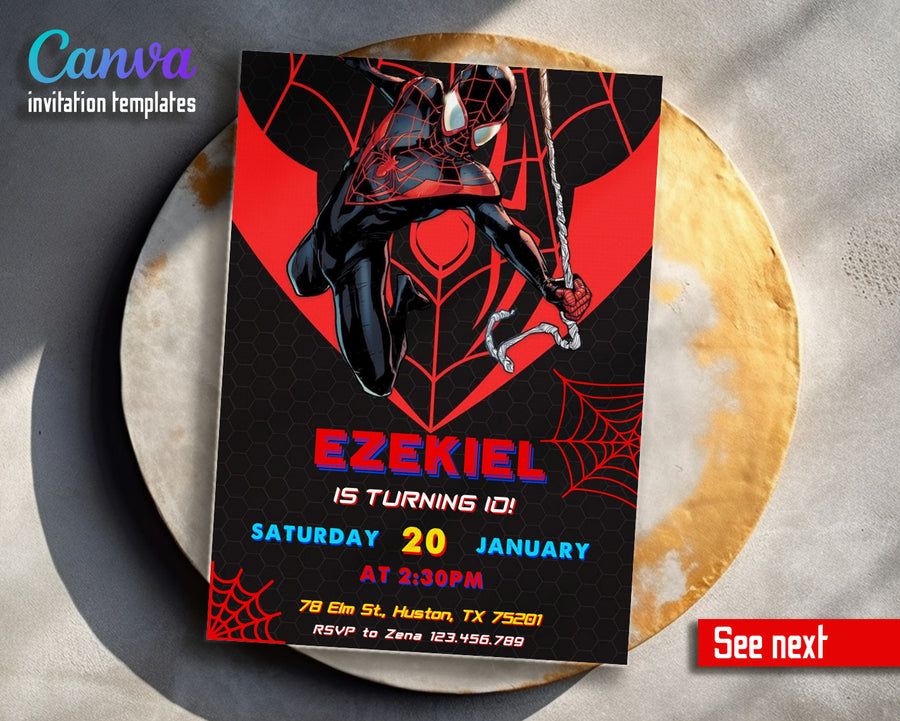
A clear invitation can say, “Join us for a Spider-Verse comic afternoon. We will give one small problem three different endings, read our comics, and share birthday food. No drawing experience or costume needed.” Add the date, start and end times, location, RSVP details, and food or access contact. If you want a themed design, the Templaterio choices below include a neon video invitation and two static templates. The workshop and free kit remain useful without buying one.
Print the three-universe comic kit
Four pages: host guide with a worked example, a landscape three-universe comic sheet, four optional problem cards, and a folding zine cover. For eight guests in four pairs, print 1, 4, 1, and 8 copies: fourteen sheets.
Download the free PDF

Templaterio is an independent shop. Our character-themed designs are fan-made and are not affiliated with or endorsed by the owners of the characters.